
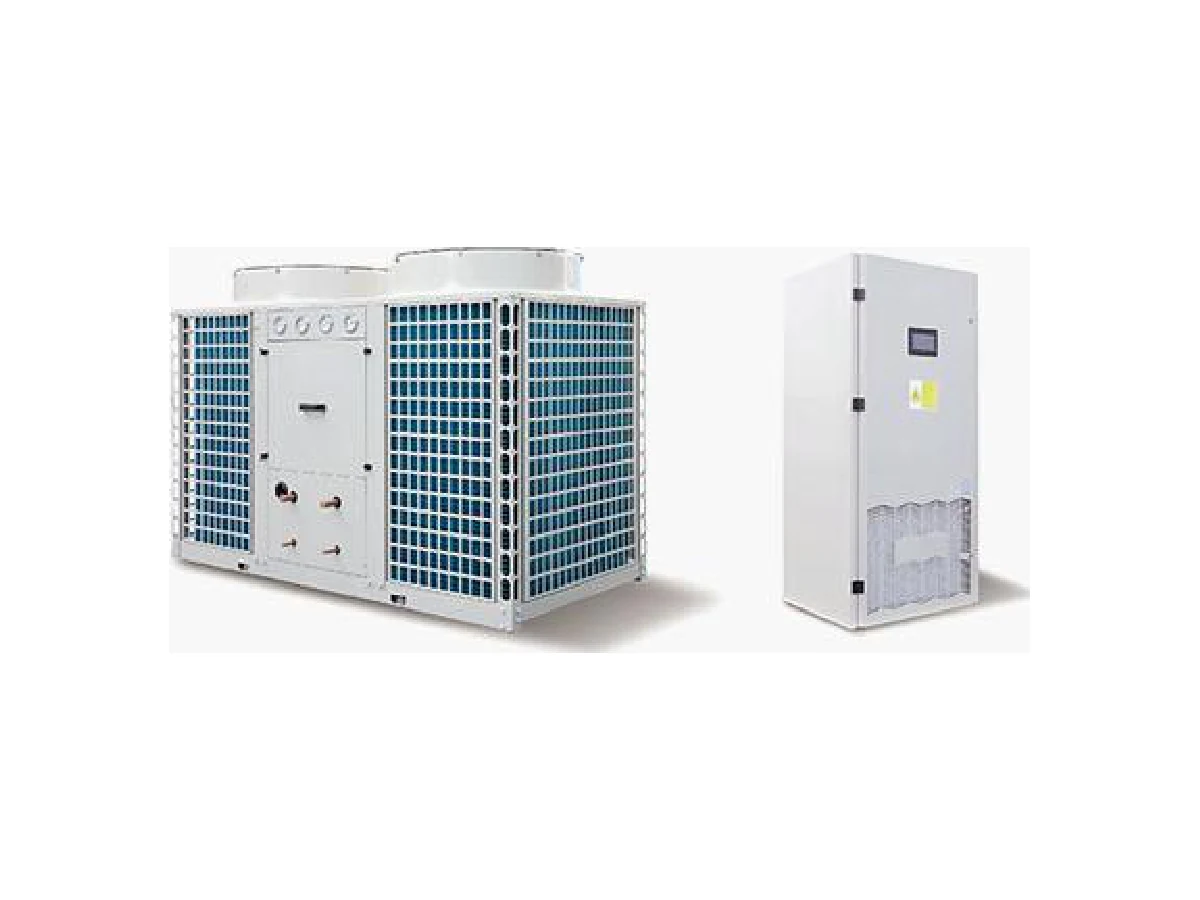
A reliable CRAC unit quotation starts with a project-specific load and control requirement, not only a room size or a catalog capacity range. Confirm the room heat load, operating conditions, temperature and humidity targets, installation constraints, controls, and required documents before comparing proposals.
The listed precision CRAC product is described for data center and cleanroom laboratory applications. Its catalog states a cooling capacity of 7.5–120 kW, temperature control of ±0.5°C, and humidity control of ±3% RH. These figures are a useful starting point, but the proposed unit must be checked against your actual design conditions, airflow arrangement, control requirements, and project configuration.
The additional questions below are general buyer guidance for preparing a technical inquiry. They are not claims that every CRAC project requires the same configuration or that the catalog figures apply under every operating condition.
Define the Room Load and Operating Conditions
The first procurement question is how much heat the unit must remove under the project’s expected operating conditions. Room dimensions alone may not identify the correct capacity. Prepare a room heat-load schedule covering the assumptions used by your project engineer or HVAC designer.
Include, where applicable:
- IT, process, laboratory, or other equipment heat release
- Lighting, people, and electrical distribution losses
- Heat entering through walls, roof, glazing, doors, and adjacent spaces
- Outdoor air or infiltration loads
- Fan motor, humidification, and other auxiliary heat sources
- Current load, expected future load, and staged expansion
- Sensible and latent load components
As general procurement guidance, ask the supplier to show both total and sensible cooling capacity at the stated entering-air and leaving-air conditions. This helps the buyer compare the selection with the project load schedule. Also ask the supplier to identify the conditions used for the calculation rather than comparing capacity numbers without their operating basis.
Record the design conditions used for the selection. These may include indoor temperature and relative humidity, outdoor design conditions, elevation, power frequency, and unusual room conditions. If air is supplied through a raised floor, overhead duct, or another distribution arrangement, provide the intended airflow path and any known resistance or pressure requirement.
Ask the supplier to evaluate the normal design case and the highest expected load case when those cases are relevant to the project. If the project includes standby units, state how the system should operate with one unit unavailable and ask the supplier to show the resulting available capacity. These are project-specific review questions, not universal CRAC requirements.
Specify Temperature and Humidity Control Targets
Temperature and humidity requirements should be written as control objectives, rather than broad phrases such as “precision cooling.” State the required room setpoint, permitted operating band, sensor location, alarm limits, and any expected response during startup or load changes.
The catalog entry for the listed precision CRAC unit states temperature control of ±0.5°C and humidity control of ±3% RH. In the inquiry, ask the supplier to clarify what these tolerances mean. For example, confirm whether each value describes control deviation around a setpoint, a stated operating capability, or a result measured under defined test conditions. Also ask where the sensors are located and whether the stated accuracy refers to room air, return air, supply air, or another measurement point.
As general buyer guidance, clarify the following points:
- Temperature setpoint and permitted operating band
- Relative humidity setpoint and permitted operating band
- Acceptable short-term excursions during startup or load changes
- Whether humidification, dehumidification, or both are required
- Sensor type, quantity, location, and calibration expectations
- High and low temperature or humidity alarms
- Automatic restart behavior after a power interruption, if required by the project
- Control interfaces required by the building management or supervisory system
Relative humidity control should be reviewed together with the project’s temperature, airflow, infiltration, and internal moisture assumptions. Ask the supplier to provide the operating conditions and configuration associated with the stated ±3% RH figure. This allows the buyer to distinguish a catalog description from a project-specific commitment.
If the project has strict environmental limits, request a proposed control sequence covering cooling stages, fan control, humidification, dehumidification, alarms, and any reheat function. Treat this as a comparison and coordination document to be confirmed for the project, not as an automatic feature of every CRAC unit.
Confirm Unit Capacity, Configuration, and Site Interfaces
After defining the load and control targets, specify how the CRAC unit must fit into the project. Configuration affects the installation arrangement, maintenance access, air distribution, electrical work, controls integration, and future replacement. The supplier should confirm which items are included in the proposed configuration.
| Requirement to state | What the supplier should confirm | Verification step |
|---|---|---|
| Cooling duty | Total and sensible capacity at the project conditions | Compare the selection sheet with the project load schedule |
| Airflow arrangement | Proposed discharge and return-air arrangement, if defined by the project | Check the room layout and intended air path |
| Temperature and humidity control | Setpoints, tolerances, sensors, humidity functions, and alarms | Review the proposed control description and stated conditions |
| Electrical supply | Voltage, phase, frequency, connected load, and operating current | Compare with the available site power and protective devices |
| Quantity and operating sequence | Number of units, duty and standby roles, staging, and lead-lag logic | Check the proposed arrangement against the project brief |
| Physical installation | Dimensions, service clearances, weight, access route, and connection points | Check against approved layouts and access constraints |
| Heat rejection or condenser arrangement | Required outdoor equipment, piping, water connections, or other interfaces | Coordinate with the project’s mechanical drawings |
| Controls integration | Communication protocol, hardwired points, alarms, and remote monitoring | Match the proposed point list with the control-system requirements |
Also request sound data, filtration details, condensate arrangements, maintenance access, and recommended service clearances when these are relevant to the project. Ask whether the quotation covers the indoor unit only or also includes associated outdoor equipment, piping, controls, sensors, and installation accessories.
Power requirements should be requested for the complete proposed arrangement. A project may need separate information for compressors, fans, heaters, humidifiers, controls, and auxiliary equipment. Ask the supplier to identify connected load and operating current for the selected configuration rather than relying on a general product description.
Request Documentation to Compare Supplier Proposals
A quotation should allow the engineering and procurement teams to check the supplier’s assumptions. Request a complete technical submittal for each proposed model and configuration.
At minimum, ask for:
- A selection sheet showing total and sensible cooling capacity at the project design conditions.
- Airflow, external static pressure where applicable, entering-air conditions, leaving-air conditions, and stated operating limits.
- Temperature and humidity control tolerances with the associated sensor locations and test conditions.
- Electrical data, control-panel requirements, communication interfaces, and a controls point list.
- Dimensional drawings showing service clearances, connections, access panels, and maintenance zones.
- A component schedule identifying compressors, fans, filters, humidity-control equipment, coils, sensors, and safety controls included in the offer.
- A proposed sequence of operation covering normal operation, staging, alarms, power recovery, and standby changeover where these functions are required.
- Installation, commissioning, operation, and maintenance documentation included or required for the project.
Use one comparison sheet for all suppliers. Record the exact model, quantity, duty and standby arrangement, design conditions, capacity basis, airflow path, electrical data, controls, exclusions, and unresolved assumptions. A proposal that omits an important item should be marked “not stated” rather than assumed to comply.
During technical review, verify that the proposed performance is tied to your project conditions. A catalog range of 7.5–120 kW does not identify the correct unit by itself, and the catalog control figures of ±0.5°C and ±3% RH do not replace a project-specific selection sheet. Ask the supplier to identify any derating, optional components, or conditions that must be met for those figures to apply.
FAQ
Is the catalog capacity range enough to select a CRAC unit?
No. The 7.5–120 kW range describes the stated product range, not the correct selection for a particular room. The supplier should match the unit to the project’s sensible and total loads, design conditions, airflow arrangement, electrical supply, and any stated redundancy requirement.
What does ±0.5°C temperature control mean in a quotation?
Ask the supplier to identify the reference setpoint, measurement location, permitted deviation, operating conditions, and control method. The catalog states ±0.5°C, but the quotation should explain how that figure applies to the proposed model and project conditions.
Should humidity control be specified as a relative humidity percentage only?
No. State the humidity setpoint and allowable band, then confirm whether the project requires humidification, dehumidification, or both. Request the operating conditions, sensor location, control description, condensate arrangement, and basis for the stated ±3% RH catalog figure.
What should be included for a standby CRAC arrangement?
State the required number of duty and standby units, the capacity needed when one unit is unavailable, lead-lag rotation, alarm behavior, and automatic changeover expectations if these apply to the project. Ask the supplier to confirm which of these functions are included in the proposed controls.
Prepare the inquiry with the required cooling capacity, sensible load, temperature and humidity targets, airflow configuration, any external static pressure requirement, electrical supply, controls interfaces, quantity, standby philosophy, installation constraints, destination, and existing drawings or project details. Share the intended application, such as a data center or cleanroom laboratory, and identify any future expansion assumptions before requesting a quotation. To submit a project-specific enquiry, discuss requirements.