
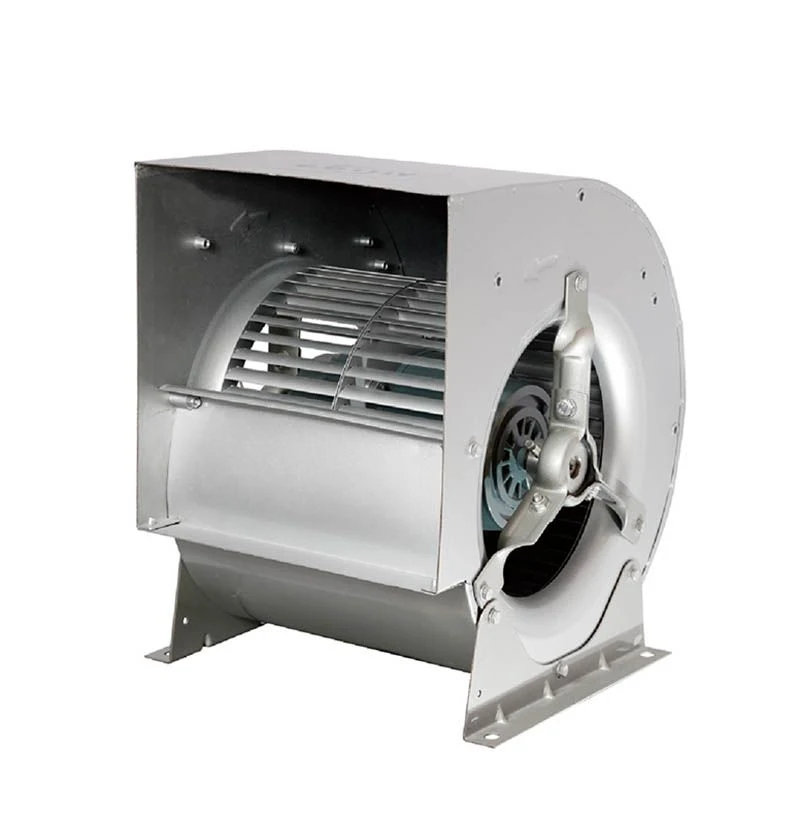
An explosion-proof fan is not a standard fan with a certified motor bolted on. The motor is the part buyers focus on and the airstream components are where most non-compliant equipment actually fails — because that is where the ignition risk sits.
Classifying the area first
You cannot specify equipment before the area is classified, and classification is the responsibility of the site operator, not the fan supplier.
Areas are divided by how likely an explosive atmosphere is present. For gases and vapours: a zone where an explosive atmosphere is present continuously or for long periods, a zone where it is likely in normal operation, and a zone where it is unlikely and would be short-lived if it occurred. Dust atmospheres use a parallel set of classifications.
Equipment is then selected to a category appropriate to the zone. Higher-risk zones demand higher-integrity equipment, and the cost difference between categories is substantial — which is why accurate classification matters commercially as well as technically.
Gas group and temperature class
Two further parameters must be stated.
Gas group reflects how easily the specific substance ignites. Groups run from those covering gases like propane, through ethylene, to hydrogen and acetylene, which are progressively harder to contain safely. Equipment certified for the most demanding group covers the less demanding ones; the reverse is not true.
Temperature class caps the maximum surface temperature the equipment may reach, from classes permitting relatively high surface temperatures down to those limiting it severely. The class must be selected so that the maximum surface temperature stays below the ignition temperature of the substance present.
A specification missing either parameter cannot be quoted properly. "Explosion-proof fan" on its own is not a specification.
Airstream construction — where the real work is
The ignition risk inside the fan is mechanical: a rotating impeller contacting a stationary casing, or a foreign object striking the impeller, producing a spark.
Spark-resistant construction is addressed through material pairing between the impeller and the parts it could contact. The established approach uses non-ferrous material — commonly aluminium or bronze — at the potential contact interface, so that a rubbing contact does not generate an incendive spark. Different construction levels exist depending on whether the impeller, the casing, or both are non-ferrous, and which combination is required depends on the zone.
Practical considerations that follow:
- Aluminium impellers are lighter and non-sparking against steel, but have lower fatigue strength than steel and are more sensitive to erosion. In dusty or abrasive service, life is shorter.
- Clearances must be generous enough that thermal growth, shaft deflection and bearing wear cannot bring the impeller into contact with the casing. This costs a little efficiency and is not negotiable.
- Shaft seals where the shaft passes through the casing must prevent the hazardous atmosphere reaching the bearing housing or the motor.
- Bearings should sit outside the airstream where possible. A bearing that overheats inside a hazardous atmosphere is an ignition source regardless of the motor's certification.
The motor
The motor must carry certification appropriate to the zone, gas group and temperature class, and the certificate must reference the actual motor supplied.
Protection concepts differ in approach. Flameproof enclosures contain an internal explosion and prevent it propagating outward. Increased-safety designs prevent arcs and excessive temperatures arising in the first place. Non-sparking types are intended for the lowest-risk zones. Which concept is acceptable depends on the zone, and each has different implications for cable entry, maintenance access and cost.
Two details buyers frequently miss. Cable glands must be certified to the same standard as the enclosure — a certified motor with an uncertified gland is not compliant, and this is one of the most common findings in site inspections. And where a variable speed drive is used, the motor must be certified for inverter operation, because variable-frequency supply changes the thermal behaviour the certification was based on.
Earthing and static
Static charge accumulation is an ignition source in its own right, particularly where dust or non-conductive material moves through the fan.
The complete assembly — impeller, shaft, casing, motor frame, ductwork connections — must form a continuous earthed path. Flexible connections between the fan and the ductwork are usually non-conductive and must be bridged with a bonding strap. Anti-static flexible connectors exist and should be specified where they are used.
This is inexpensive to do correctly and easy to omit during installation.
Documentation to require
Ask for the certificate covering the fan as an assembly, not only the motor. Ask for the marking that will be applied to the nameplate, which should encode the equipment group, category, protection concept, gas group and temperature class. Ask for the declaration of conformity, the instructions covering installation and maintenance in hazardous areas, and confirmation of the construction level of the spark-resistant design.
Check that the certificate references the specific model and configuration you are buying. A certificate covering a range does not automatically cover a variant modified for your duty — and fans are frequently modified for duty.
What to send for a quotation
Zone classification, the substance present with its gas group and ignition temperature, required temperature class, airflow, static pressure, air temperature, dust loading, supply voltage and frequency, whether a variable speed drive is used, installation orientation, and the certification scheme required for your jurisdiction.
Send us the area classification and duty and we will quote a fan with the certification documents identified up front, so compliance can be checked before the order rather than at commissioning.