
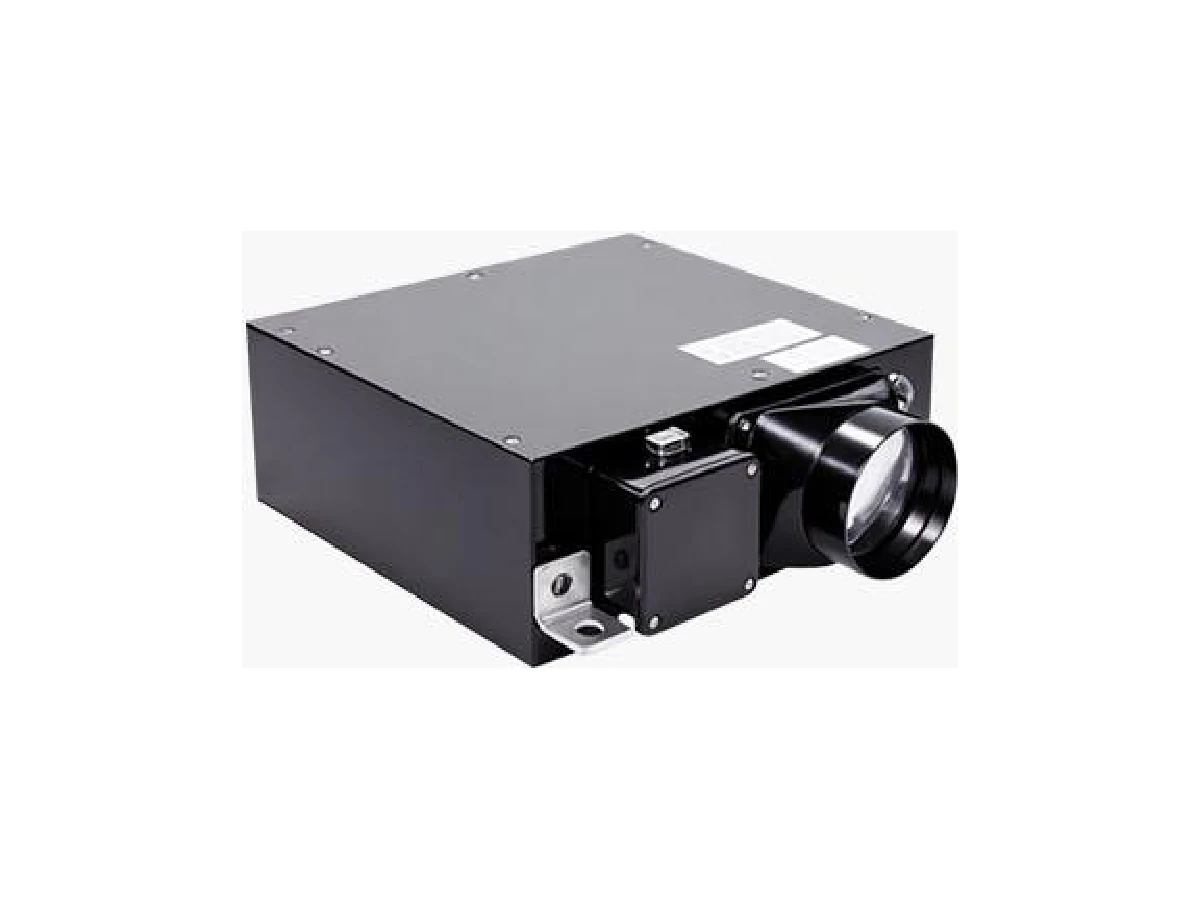
A low-profile inline duct fan can suit a false ceiling only if it fits the available void and delivers the required airflow at the pressure of the installed duct system. Confirm the complete dimensions, operating point, acoustic test conditions, controls and access needs—not just the fan’s height or headline airflow.
Confirm ceiling clearance, duct size and service access
Measure the usable void at the proposed fan location, accounting for ceiling framing, pipes, cables, insulation and other services. Compare this with the fan’s overall dimensions, not just its body height. Allow for duct connections, electrical entry, supports, vibration isolation and the space needed to remove or inspect components.
The ultra-slim inline ceiling fan is specified at 150–180 mm high, with airflow of 180–800 m³/h. Those figures are a starting point, not proof that the unit will fit or meet the project duty. Ask for a dimensioned drawing showing the full envelope, inlet and outlet sizes, connection orientation, mounting points and required service clearances. View the ultra-slim inline ceiling fan and check the proposed model against the ceiling coordination drawings.
Confirm the duct diameter and whether transitions, flexible connectors, grilles, dampers or filters are part of the system. A compact unit may still need a larger service opening or access panel. Plan how staff will reach electrical connections and any parts requiring inspection or cleaning.
Match airflow and pressure at the actual operating point
First establish the design airflow for the room or branch, then account for resistance through the full installed route: duct length and fittings, terminals, filters, dampers and other components. Ask for the fan curve and the pressure basis used for selection. The supplier should identify the proposed operating point on the curve rather than give a free-air airflow figure alone.
Specify whether the required value is fan static pressure or fan total pressure, and how it is defined for the proposed inlet and outlet arrangement. Static pressure is not interchangeable with total pressure; a static-tap difference is not generally the fan’s total pressure. Compare the same pressure basis and installation arrangement when reviewing offers. For a plain-language explanation of the terms, see fan technical specifications: airflow, static pressure and power.
If the duct route changes after selection, recheck the system curve and operating point. Elbows, transitions and nearby obstructions can affect performance beyond their simple straight-duct loss; review how ductwork changes fan performance when the layout is restricted.
Check noise data, measurement conditions and installation effects
The fan specification states noise below 30 dB(A), but that figure is not enough to predict the sound level in an occupied room. Ask whether it is sound power or sound pressure, where and how it was measured, the operating speed and airflow, and what test setup was used. Sound pressure at a receiver depends on distance, room conditions, nearby surfaces and the path through the duct and ceiling.
Request octave-band data if the project has defined acoustic limits, and clarify whether the figure covers inlet, outlet or casing radiation. Duct-borne sound, grille noise and vibration transmitted into ceiling supports may affect the result. Confirm the proposed installation details, including flexible connections or isolation measures where required, and do not treat a headline dB(A) value as a room-level guarantee.
Specify motor, speed control and electrical requirements
The product description does not establish a motor type, supply, control interface or wiring arrangement. Ask the supplier to state the exact motor and drive configuration for the proposed model, and whether the motor is in the airstream. Specify the available voltage, phase and frequency, electrical input or rated power, starting method, protection and wiring connection requirements for the project.
If speed control is needed, identify the control method and compatible controller—such as the required signal or approved voltage-control method—and confirm the usable speed range and any operating limits. Do not assume that a controller is included or that a particular controller works with the offered motor. Motor current alone does not establish electrical input power or delivered airflow.
Request the documents and checks needed before ordering
Use the following checklist to compare the proposal with the project requirements:
| Requirement | Ask the supplier for | Verify before approval |
|---|---|---|
| Fit and connection | Dimensioned drawing, overall envelope and connection details | Check the ceiling void, duct size, access opening and service clearances |
| Airflow and pressure | Fan curve and marked duty point, with pressure definition | Confirm airflow at the required pressure and specified installation arrangement |
| Acoustics | Sound data with metric, test conditions, operating point and radiation path | Check the project limit and whether the value is meaningful for the room and duct layout |
| Motor and controls | Motor nameplate data, wiring diagram and controller compatibility | Match supply and control signals to the project electrical design |
| Supply and project documentation | Quotation schedule, model identification and documents required for the destination | Confirm quantity, destination, agreed scope and any current project or authority requirements with the relevant authority |
Ask the supplier to identify any assumptions behind the proposed selection and to confirm the exact model, included accessories and agreed duty in writing. A broader industrial fan RFQ checklist can help organize a multi-item request.
FAQ
Is the stated 150–180 mm height enough to confirm the fan will fit?
No. Check the complete dimensioned envelope, duct connections, electrical access, mounting arrangement and clearance needed for installation and maintenance. Confirm these against the actual ceiling coordination drawings.
Can I select the fan using the 180–800 m³/h airflow range alone?
No. Airflow depends on the system resistance and the fan’s performance curve. Confirm the required airflow at the project’s pressure and ask the supplier to mark that operating point on the curve.
Does a noise figure below 30 dB(A) guarantee a quiet room?
No. First establish whether the figure is sound power or sound pressure and request its test conditions and operating point. The installed room result also depends on duct-borne sound, casing radiation, vibration, receiver position and room conditions.
For a project review, share the required airflow and pressure basis, ceiling-void dimensions, duct layout and size, noise target, motor supply and control needs, quantity, destination and any existing fan details. Use these details to discuss requirements and confirm the proposed model and documents before ordering.