
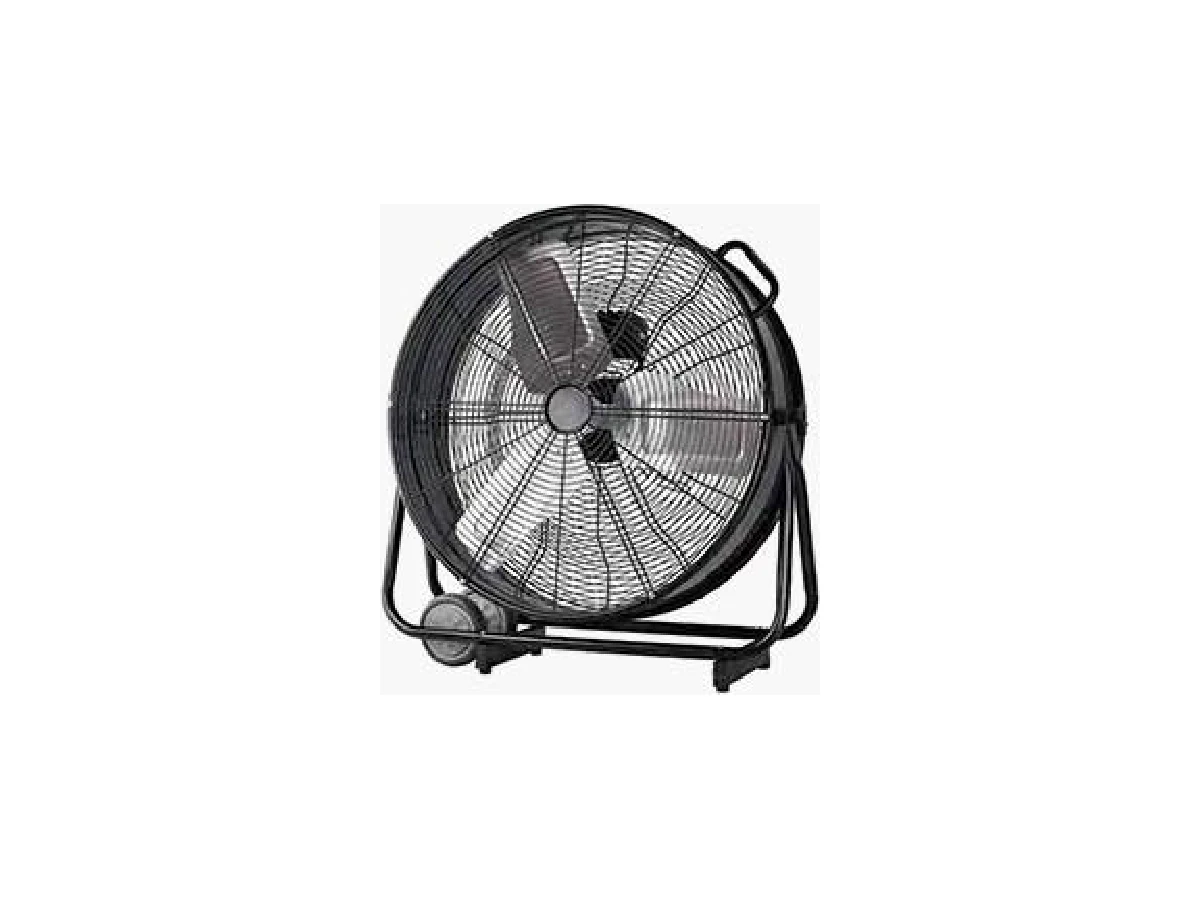
A commercial floor blower for drying should match the size and layout of the area, the airflow path needed across the surface, and the available electrical supply. Start with the proposed model’s stated airflow and speed settings, then confirm outlet direction, handling features and performance-test details before ordering.
Define the drying area and airflow path
Describe the job before comparing models. Note the floor type, approximate area, room shape, obstacles, and whether the blower will be moved between rooms or left in one position. For carpet or commercial floor drying, the airflow needs a clear path across the target surface; a high airflow figure alone does not show how evenly or effectively air will reach every area.
Map where the blower will sit, where its outlet will point, and whether the air can travel along the floor without being blocked by furniture, partitions or equipment. If the job involves multiple zones, explain the sequence of use and how frequently the unit must be repositioned. Confirm that the proposed unit’s dimensions and operating position suit the available space.
The listed low-profile commercial floor blower is described for carpet and commercial floor drying, with a telescopic handle and wheels. Its outlet angle, dimensions and operating clearances are not specified in the available product details, so confirm those against your site setup. See the low-profile commercial floor blower air mover dryer for the offered configuration.
Confirm airflow and available speed settings
The product listing gives an airflow range of 2200–4500 m³/h and identifies three speeds. Treat these as model-level stated values, not a guarantee that every installation will deliver a particular airflow at the floor. Ask the supplier to clarify which configuration and measurement basis apply, and whether airflow figures are provided for each speed or only as a range.
Three speed settings can help an operator adjust the unit to the job, but the listing does not specify the airflow at each setting or a control method beyond “3-Speed.” Confirm how speeds are selected, whether the settings are fixed, and what airflow corresponds to each one under the stated test conditions. Do not infer drying time from airflow alone; the result also depends on the surface, moisture load, room conditions and air path.
| Requirement | What to specify | What to verify |
|---|---|---|
| Airflow | Required airflow basis and operating configuration | Ask for the stated test method, configuration and results by speed, if available |
| Speed control | Three settings or another agreed control requirement | Confirm how the settings are selected and whether each setting has documented airflow data |
| Outlet direction | Required direction and angle for the floor layout | Request drawings or photos of the proposed unit and confirm its operating position |
| Power supply | Site voltage, phase and frequency | Match these to the unit nameplate and supplied electrical documentation |
| Handling | Required movement, storage and access conditions | Confirm dimensions, weight, handle extension and wheel arrangement |
For a broader explanation of how fan airflow and pressure figures should be compared, see fan technical specifications explained. A floor blower’s airflow listing should not be treated as a pressure rating or as proof of delivered airflow in an unverified setup.
Specify outlet direction, power supply and controls
State where the air must go: along the floor, toward a wall, beneath equipment, or into a defined section of a room. Ask for the outlet orientation and any adjustment range in the proposed configuration. If airflow direction is fixed, confirm that the unit can still be positioned to serve the required zones.
The listed product details do not state voltage, phase, frequency, input power, plug type or cord length. Provide the site’s electrical requirements and ask the supplier to confirm the exact model’s nameplate data, connection arrangement and operating instructions. Do not select a unit based on motor current alone; request the electrical input or rated power information appropriate to your purchasing and site review.
Confirm the speed control location and operation, including whether the unit needs to be switched off before changing settings. If multiple units will be used, clarify whether each has its own control and whether any shared control or monitoring is included. Do not assume that unlisted electrical features are part of the offer.
Check portability, handle and wheel requirements
A telescopic handle and wheels are listed, but the details needed to assess site handling are not. Ask for the blower’s overall dimensions, operating weight, transport position, handle extension and wheel type. Check doorways, lifts, thresholds and storage spaces along the intended route.
If the blower will be moved frequently, confirm how it is lifted or tilted and whether the handle remains secure during transport. For use on wet floors or in active work areas, ask what operating and cleaning instructions apply. Do not infer suitability for a particular wet, dusty or demanding environment from the product category alone; request the manufacturer’s stated limitations for the proposed model.
Request operating-point and test details
Before approving the selection, ask for a model-specific datasheet and documentation showing how the airflow range was established. Useful details include the test configuration, measurement method, speed setting for each result, and any stated tolerances. Confirm that the offered model and configuration match the documents.
For this portable blower, request information on the outlet arrangement, electrical nameplate, dimensions and handling details alongside the airflow data. If your project has a defined drying process, include the floor type, target area and operating conditions so the supplier can respond against the actual application rather than a general airflow range. The industrial fan RFQ checklist can help organize the information to request.
FAQ
Does the listed airflow range apply to all three speeds?
The product details state a 2200–4500 m³/h airflow range and three speeds, but do not map airflow values to individual settings. Ask for the airflow at each speed, where available, and the configuration and test basis used for those figures.
Is outlet direction adjustable?
The available product details do not specify outlet angle or adjustment. Confirm the outlet orientation and any adjustment options for the proposed model, then compare them with the intended airflow path across the floor.
What electrical supply does this floor blower require?
Voltage, phase, frequency, input power and plug details are not specified here. Provide the site supply requirements and request the exact model’s nameplate and connection information before ordering.
To prepare a procurement brief, share the required quantity, drying area and floor type, airflow and speed expectations, outlet direction, site electrical supply, handling constraints, destination and any existing project requirements. Use discuss requirements to send those details for review.