
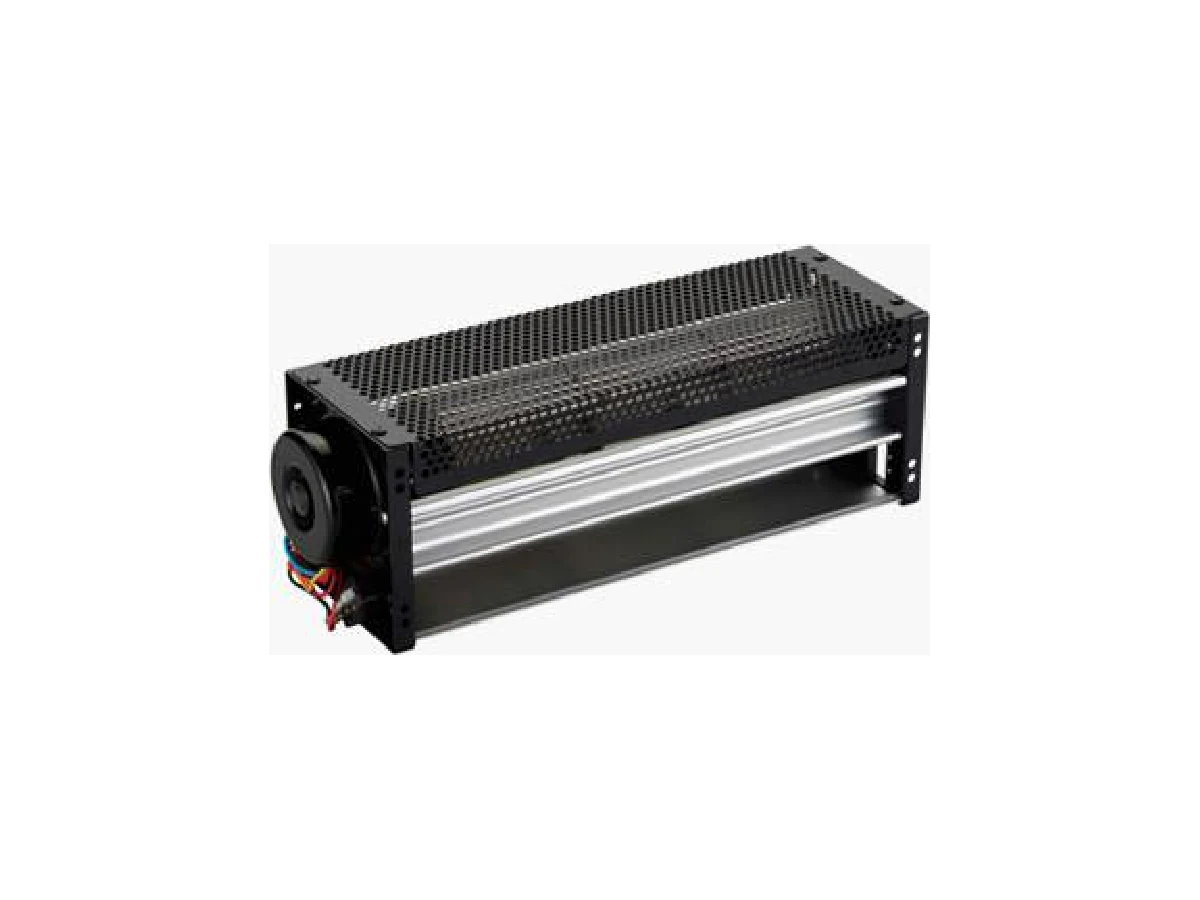
Selecting a centrifugal fan for a commercial kitchen exhaust system starts with a defined airflow and pressure duty, not a model name or a general application label. Give the supplier the duct layout, exhaust conditions, fan arrangement and electrical requirements, then check the proposed operating point against a performance curve for that configuration.
Define the exhaust duty and required operating point
Establish the required exhaust airflow from the project design and applicable authority requirements; do not use an unsupported general airflow recommendation. State the design airflow and explain whether it applies to a single hood, several hoods, or the complete system. Include how the system will operate if it has different cooking loads or fan speed settings.
Record the air conditions at the fan inlet, including temperature, density assumptions, moisture and any expected grease, condensate or cleaning exposure. Identify whether operation is continuous or intermittent and whether the fan must run during specific operating or emergency conditions. The supplier needs these details to assess the proposed construction and motor arrangement; a general HVAC application description alone does not confirm suitability for a kitchen exhaust duty.
Specify the required pressure at the same airflow and for the intended installation. Make clear whether the figure is fan static pressure, fan total pressure, or a system pressure difference measured at defined points. These are not interchangeable. If design documents give a pressure value, provide the stated basis and measurement locations rather than asking the supplier to infer them.
Account for duct resistance, fittings, and the installed pressure basis
The system pressure requirement depends on the complete air path, not just straight duct length. Share duct dimensions and layout, hood or inlet arrangement, elbows, transitions, dampers, filters, discharge fittings and other items that add resistance. Note any unusual restrictions, nearby walls or structures, and the fan inlet and outlet arrangement. Poorly arranged connections can create system effects that change installed performance; see how ductwork changes fan performance.
Ask the designer or supplier to state the pressure basis used for selection and how installation effects are considered. A static-tap pressure difference is not automatically the fan’s total pressure. For a valid comparison, use the same pressure definition and installation arrangement for both the system requirement and the fan curve.
| Information to provide or request | Verification step |
|---|---|
| Design airflow and the intended system operating mode | Confirm the proposed duty point shows the required airflow, not only a maximum or free-air value. |
| Pressure value, pressure definition and measurement points | Match the system and fan pressure basis; ask for the stated installation arrangement. |
| Duct layout, fittings, filters and discharge details | Check that the supplier’s selection accounts for the actual connected system. |
| Exhaust temperature, density basis and contaminant exposure | Confirm the proposed fan and motor arrangement are suitable for these stated conditions. |
| Power supply, controls and operating speed | Compare the offer with site electrical and control requirements; request motor and input data. |
For additional background on pressure terminology, airflow and power, see fan technical specifications explained.
Confirm fan construction, drive arrangement, and exhaust conditions with the supplier
Discuss impeller type, casing, materials, orientation and access with the supplier. Ask how the proposed design addresses the stated air conditions and expected deposits, moisture or cleaning practices. If the exhaust may involve corrosive contaminants, specify them and request a material recommendation rather than assuming a general-purpose construction will suit. Any project-specific fire, hygiene, building or ventilation requirements should be confirmed with the responsible designer and relevant authority; requirements can vary by location and project.
Confirm whether the fan is direct-driven or belt-driven and identify which components are in the airstream. Do not assume that a direct-drive motor is outside the exhaust stream, or that a particular motor protection or insulation class proves suitability for process temperature, washdown or hazardous conditions. Request the motor location, temperature limits and relevant construction details for the proposed configuration.
Choose the drive based on the project’s speed-control needs, maintenance plan, available space and required operating point. For a belt drive, ask about belt and pulley access and maintenance provisions. For either arrangement, distinguish fan shaft power, motor output and mains electrical input. Motor current alone does not establish electrical input power or confirm airflow.
Request a performance curve and check the proposed selection against the duty
Ask for a curve or selection sheet for the exact proposed fan configuration, including its speed and the stated air density or temperature basis. The document should identify the pressure definition, airflow, absorbed fan power and operating point. Request motor output rating and electrical input data separately where available, along with required power supply and control details.
Check that the duty point is plotted on the curve and that the stated airflow and pressure use the agreed basis. Ask the supplier to identify the selected speed, any control method and the proposed motor rating. If the system’s resistance changes with operating mode, have each required mode assessed rather than treating the fan’s maximum airflow as the expected installed airflow. A different system curve changes the operating point, so speed-based affinity relationships alone do not establish actual electrical savings or part-load performance.
Where available, request the basis and procedure for performance data and the limits of any guarantee. Ask how installed performance can be checked at commissioning, including the specified airflow measurement method, pressure taps and test locations. A model label or headline airflow figure is not a substitute for a duty-point selection. To prepare a complete request, use the industrial fan RFQ checklist.
Clarify installation, maintenance access, and project documentation
Before approval, confirm fan orientation, mounting, support loads, connection dimensions, access clearances and the route for removing serviceable parts. Review how the fan connects to the duct and whether the installation needs flexible connections, vibration isolation, a drain or other project-specific provisions. Do not assume these items are included unless the quotation identifies them.
Agree on the documents needed for design review, installation and handover. Depending on the project, request a dimensioned drawing, wiring information, operating instructions, maintenance requirements, performance curve, motor data and a parts list. State any required language, format or destination-specific documentation when requesting the quotation. Verify current project and import requirements with the relevant authority rather than relying on generic assumptions.
FAQ
What information is essential for a kitchen exhaust fan selection?
At minimum, provide the required airflow, pressure definition and basis, duct and fitting layout, exhaust temperature and condition, fan location and arrangement, power supply, controls and intended operating modes. If any item is unknown, identify it as an open design assumption instead of leaving the supplier to guess.
Can I select a fan from its maximum airflow rating?
No. A maximum airflow figure by itself does not show whether the fan can provide the required airflow against the connected system resistance. Compare the specified duty point with the fan performance curve for the proposed configuration and pressure basis.
What should I use to compare two supplier offers?
Compare each offer at the same airflow, pressure definition, air conditions and installation arrangement. Check the proposed curve, speed, motor and electrical input data, construction, dimensions, controls, access provisions and included documentation. Ask suppliers to explain any differences in assumptions before comparing price or model names.
For a project brief, share the target airflow and pressure basis, exhaust conditions, duct and fan arrangement, electrical supply and controls, quantity, destination, required documents and any existing drawings or model details. Send those details to discuss requirements so the proposed selection can be reviewed against the project duty.