
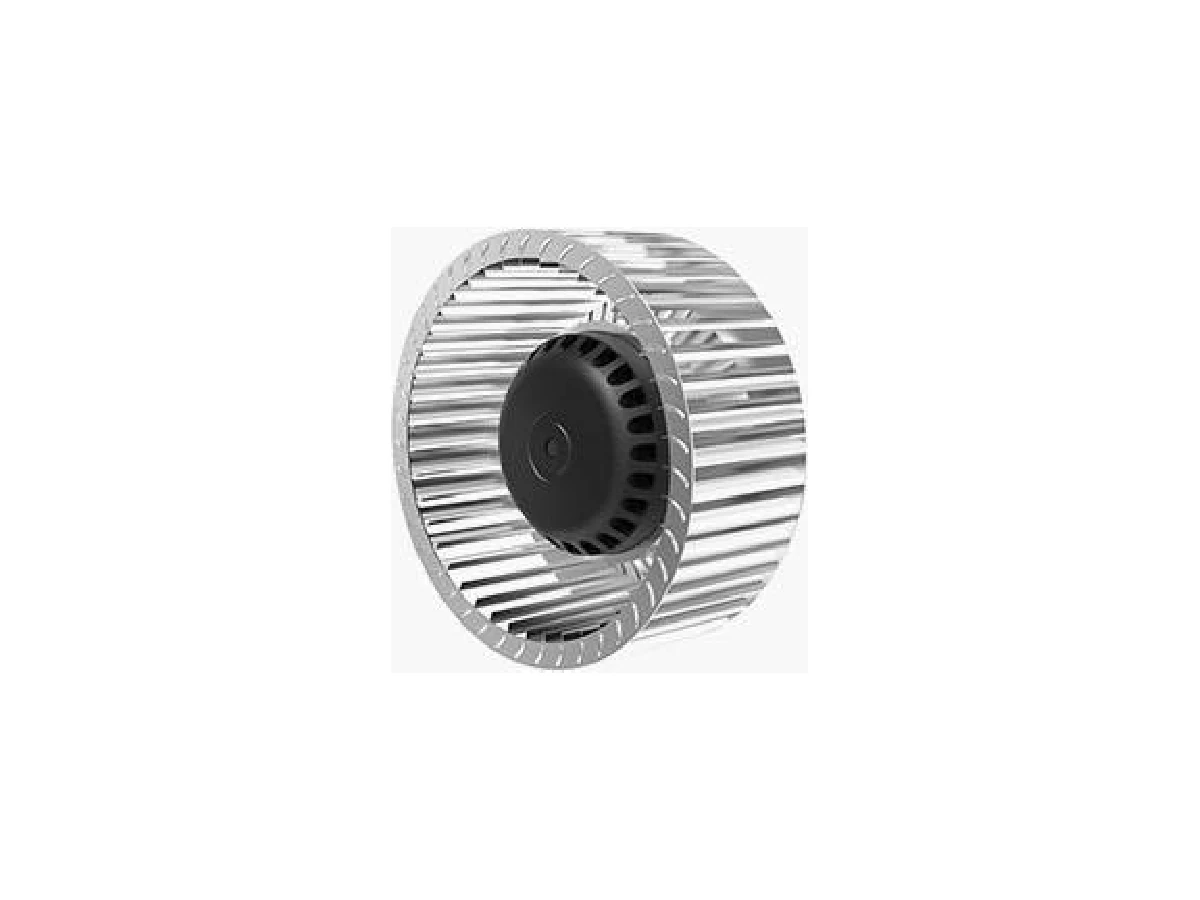
A motor-only replacement is suitable only when the new motor matches the existing fan’s mounting and impeller interface, electrical supply, controls and required operating duty. If the motor and impeller form an integrated assembly, or compatibility cannot be confirmed, specify a complete fan unit instead of treating a motor with similar voltage or dimensions as a direct substitute.
1. Confirm whether the motor is replaceable on its own
First identify how the motor, rotor and impeller are joined. Some designs allow the motor to be removed while retaining the fan wheel; others use a matched motor-impeller assembly that is not intended to be separated in service. Check the original model plate, parts list, assembly drawing and maintenance instructions. If these are unavailable, send clear photos and measurements to the supplier and request written confirmation that a motor-only replacement is supported for the exact fan model.
Inspect the existing impeller, hub, supports and wiring for wear, corrosion, cracks, rubbing or heat damage. A replacement motor cannot correct an out-of-balance, damaged or unsuitable impeller. If the interface, impeller condition or balance cannot be established, price the decision as a complete fan replacement as well. For the wheel-to-drive details, see how to specify a replacement fan impeller by fit and drive.
2. Record mounting, envelope, rotation and impeller interface
Do not rely on an overall diameter or a matching photo. Measure the mounting face and hole pattern, pilot or locating features, rotor dimensions, axial length, and clearance to the casing, inlet and nearby equipment. Record the impeller connection in detail: hub shape, bore, key, fasteners, engagement depth or any other locating feature present. State the measurement units and identify the reference face for each dimension.
Record the required rotation from a defined viewing position, and note the airflow direction and fan inlet/discharge arrangement. Confirm that the replacement clears the housing throughout rotation. The table below is a practical request-and-check list.
| Requirement | Record | Verify before ordering |
|---|---|---|
| Mounting | Hole pattern, locating features and reference face | Compare a dimensioned drawing with the existing support |
| Envelope | Rotor diameter, axial length and surrounding clearances | Check against the fan casing and adjacent parts |
| Impeller interface | Hub, bore, key, fasteners and engagement | Confirm the exact interface and whether the existing wheel may be reused |
| Rotation and airflow | Direction viewed from a stated side; inlet and discharge | Confirm against the installed assembly and fan drawing |
| Assembly integrity | Impeller condition and balance requirements | Ask whether the proposed motor-wheel combination requires balancing or a complete assembly |
For a complete-assembly comparison, review the backward-curved fan with mounting bracket and the AC external-rotor forward-curved fan wheel. These are fan products, not evidence that a motor alone will fit an existing unit.
3. Match supply, frequency, speed and motor arrangement
Specify the actual supply: AC or DC, voltage, phase, frequency, and any required capacitor or driver arrangement. Also request rated speed and its stated operating conditions, rated motor output, rated input current or power, and the motor’s permissible operating range. Do not treat a similar nameplate voltage or pole count as proof of matching speed or fan duty.
Confirm the motor arrangement in the existing fan. An external rotor may form part of the rotating fan assembly, so the proposed replacement must suit the impeller and its support geometry. Ask whether the motor is intended to run in the airstream and whether the application’s air temperature and environment are within its stated limits. Protection rating and insulation class alone do not establish suitability for process heat, washdown or hazardous service.
Keep power quantities distinct: motor shaft power, motor rated output and mains electrical input are not interchangeable. Current alone does not establish input power or airflow. For a broader explanation of pressure and power terms, see fan technical specifications explained.
4. Check EC control signals, wiring and protection
For an EC replacement, match the supply and the control interface, not just the motor type. Request the wiring diagram, connector pinout, signal type and range, reference/common connections, speed-command behavior, and any communication protocol details needed by the existing controller. A 0–10 V input, PWM command and digital communication are different interfaces; confirm the exact option on the proposed motor and how it responds to loss of signal or power.
For AC motors, confirm the connection diagram, phase, frequency, starting method and any required external control gear. For either type, ask how thermal protection, overload protection and fault indication are provided, and what the installer must connect. Check the required ambient conditions and ingress protection against the actual installation; do not infer suitability from an IP code alone.
5. Verify performance at the fan operating point
The replacement must operate the existing fan at the required duty, not merely turn the impeller. Send the design airflow and pressure, air density or operating air conditions, and the installed arrangement, including relevant duct or system resistance. State the pressure basis: fan static pressure as defined for the proposed data, or total pressure. A static-tap difference is not generally fan total pressure, so compare data on the same basis and installation arrangement.
Request a performance curve or documented operating point for the proposed motor and the actual fan wheel or assembly. Confirm airflow, pressure, speed, absorbed shaft power and efficiency at that point, along with the motor’s allowable load. If speed or impeller geometry changes, the operating point must be recalculated for the system curve; do not assume the existing fan performance carries over. If the required duty cannot be demonstrated with the existing wheel, compare a complete fan selection.
FAQ
Can I replace an external-rotor fan motor using the nameplate voltage alone?
No. Voltage is one matching condition. Confirm frequency, phase or DC supply, speed, mounting, impeller connection, rotation, controls, protection and the required fan operating point.
Can I reuse the existing impeller with a new motor?
Only if the supplier confirms that the motor and impeller interface, clearances, speed and load are compatible, and the wheel is in suitable condition. Ask whether the assembled rotating parts need balancing. If those points cannot be verified, specify the complete fan assembly.
Does a matching IP rating mean the replacement is suitable for washdown?
No. Ask for written application suitability for the actual exposure, cleaning method, temperature and installation. An IP rating by itself does not establish washdown, process-temperature or hazardous-area approval.
For a procurement review, share the existing fan and motor model numbers, photos or drawings, measured interfaces, supply and control details, required airflow and pressure, quantity, destination, and any site or project constraints. Use discuss requirements to send the information and clarify whether a motor-only replacement or complete fan assembly should be specified.