
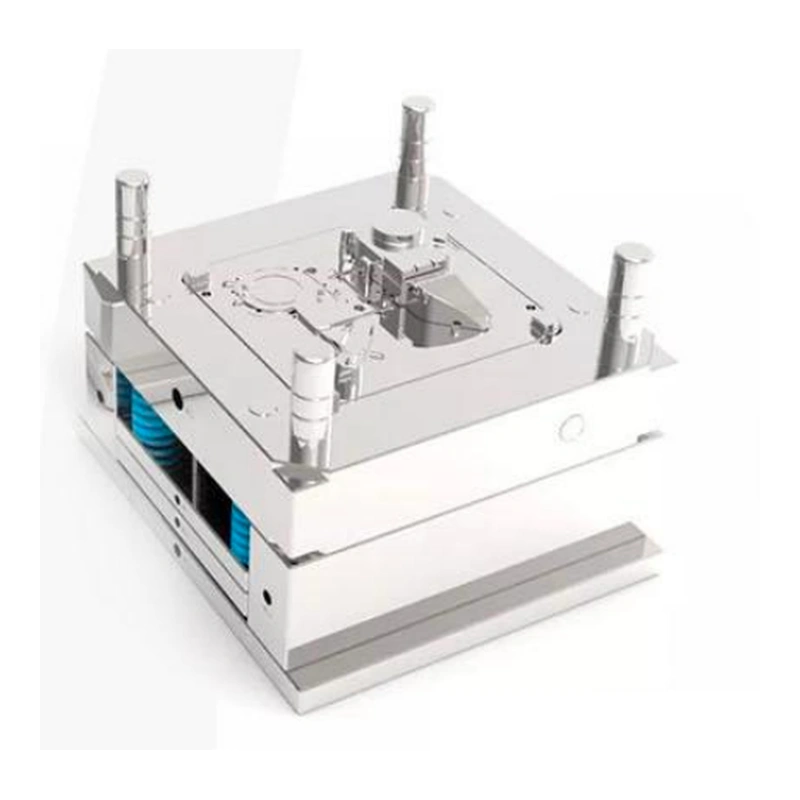
For a custom fan impeller, choose cavity count by matching forecasted demand for accepted parts to the proposed tool, molding machine and validation plan. A multi-cavity tool can produce more parts per molding cycle, but it is not automatically the lower-cost or lower-risk choice; compare total project cost and demonstrate that every cavity meets the same requirements.
1. Start with the production forecast
Build the forecast in good parts, not just molding cycles. Record expected annual demand, launch quantity, ramp schedule, forecast range, product variants and the time available for production. Separate firm demand from uncertain or later-stage demand so a speculative high case does not determine the initial tool design by default.
Estimate required cycles using: accepted parts required ÷ (active cavities × expected accepted-part yield per cavity). Treat yield as an assumption to validate, not a guaranteed value. If the production schedule has downtime or planned maintenance, account for that separately in available production hours. Ask the molder to show the cycle-time and capacity assumptions used in its proposal, including how those assumptions change between the forecast cases.
2. Compare total project cost
Compare the full cost of supplying accepted impellers over the period relevant to the project. Include tooling, molding and setup, material, expected scrap, inspection, tool maintenance, storage and any revalidation after a repair or design change. Request the cost comparison at the same forecast volumes and acceptance requirements; otherwise the alternatives are not directly comparable.
| Decision factor | Single cavity | Multi-cavity | What to verify |
|---|---|---|---|
| Initial tooling | One part-forming cavity; proposed tool scope still matters | More cavity positions and associated tool details | Itemized quote, included components and excluded costs |
| Output per cycle | One part per completed cycle, before rejects | Potentially several parts per cycle, before rejects | Active cavity count, demonstrated cycle assumptions and cavity-level yield basis |
| Process validation | One cavity to characterize | Each cavity needs identifiable, comparable results | First-article plan and records labeled by cavity |
| Forecast uncertainty | May limit initial tooling exposure if demand is modest | Capacity may be unnecessary if forecast volume does not materialize | Low, base and high demand cases, plus a plan for later capacity changes |
A larger cavity count does not by itself prove a lower cost per accepted part: cycle time, yield, process stability and maintenance affect the comparison. Ask for the assumptions and calculation behind the quoted unit cost rather than relying on cavity count alone.
3. Check resin, geometry and machine fit
Before approval, confirm the specified resin and grade, reinforcement or additives, color, drying and handling requirements, and any recycled-content limits. The resin and impeller geometry influence filling, cooling, shrinkage and dimensional control. Ask how the proposed gate and runner arrangement, cooling layout and ejection approach address the blade, hub, bore and other critical features. For a fan component, review the agreed fit and drive details alongside the impeller drawing using the replacement impeller fit and drive guide.
Have the molder confirm that the proposed tool dimensions, projected shot size, clamping requirement, ejection arrangement and utilities suit the identified machine. Request the machine make and model or the relevant capacity limits, along with the proposed process window. Do not accept a cavity-count proposal based only on nominal machine tonnage; check the full tool and process configuration.
4. Define cavity-level acceptance
Agree the inspection method and acceptance limits before the tool is released for production. Require cavity identification on trial parts and reports so results from one cavity cannot conceal variation from another. The buyer and supplier should define which characteristics are critical and how measurement samples will be selected.
| Requirement | Evidence to request | Buyer verification |
|---|---|---|
| Dimensions and fit | Results by cavity for agreed drawing features | Check the hub, bore, blade geometry and assembly interfaces against the approved drawing and method |
| Mass and visual condition | Recorded part mass and documented visual criteria by cavity | Compare cavity results; review defects against written acceptance limits |
| Balance and fan function | Agreed balance method and test conditions for the assembled impeller or fan | Confirm the test setup, acceptance criteria and that results represent the intended assembly |
| Repeatability | Trial records identifying resin, process settings, date and cavity | Review results from a defined run and confirm deviations are resolved before approval |
Use the industrial fan RFQ checklist to align component requirements with the wider fan-project specification. First-article acceptance should state what is approved, which revision it covers, and whether production release is conditional on corrective actions.
5. Document tool life and change control
Do not treat a cycle-life number as a universal guarantee. Put the tool-life commitment in the project agreement and define what counts as a shot, the assumed resin and process, the maintenance and wear-part scope, and the acceptance condition at the stated life. Clarify whether the commitment concerns the tool operating, producing parts within agreed limits, or another defined outcome. For a multi-cavity tool, specify how a failed cavity affects production, repair obligations and acceptance.
Document tool ownership, location, access, maintenance records, spare inserts, repair authorization and end-of-project transfer. Define who approves changes to resin, geometry, gate, process window or cavity configuration, and when those changes require new samples or revalidation. Confirm that approved drawing, tool design, process record and first-article report use compatible revisions.
FAQ
Does a multi-cavity mold reduce the cost per impeller?
Not necessarily. It can increase parts produced per cycle, but the result depends on tooling cost, cycle time, accepted-part yield, maintenance and actual demand. Compare total cost at the same forecast and acceptance basis.
Should a new project start with a single-cavity tool?
There is no universal answer. Compare the launch and forecast volumes, the cost and feasibility of later tool changes, and the validation burden. If demand is uncertain, ask for a documented comparison of staged tooling options rather than assuming one cavity is the default.
What should first-article approval cover?
Define the drawing revision, resin and process conditions, cavity-level dimensional and visual results, agreed balance or functional checks, and the disposition of any failures. Approve production only against those written criteria.
For a tooling review, share the impeller drawing and material, annual and launch quantities, forecast range, required machine or process details, destination, and project acceptance criteria. Then discuss requirements for the proposed cavity count and validation scope.