Technical resources for fan selection, airflow, static pressure, motor configuration, and export documentation.
⚙️ Technical Guide
Fan Bearing Maintenance: Lubrication, Temperature and Early Warning Signs
·4 min read
Bearings are the part of an industrial fan most likely to fail, and most failures trace back to lubrication: too little, too much, the wrong grease, or contamination. A practical maintenance routine for belt-driven and direct-driven fans.
Corrosion-Resistant Fans: Choosing Between PP, FRP, Stainless Steel and Coatings
·3 min read
Acid fumes, chlorides and solvent vapours destroy an ordinary steel fan in months. How polypropylene, fibreglass-reinforced plastic, stainless steel and coated steel compare on chemistry, temperature and static electricity, and the questions that decide the material.
Fan Selection at Altitude and Temperature: Correcting for Air Density
·5 min read
Fan curves are drawn for standard air at 1.2 kg/m³. At 2,000 m, or with gas at 200 °C, the same fan moves the same volume but develops less pressure and absorbs less power, and a hot-gas fan started cold can overload its motor. How to correct a selection properly.
Commissioning: Measuring the Airflow You Actually Got
·5 min read
Verify installed fan duty with a defined traverse, density and uncertainty; distinguish static and total pressure and use speed and power data for diagnosis.
Compare dampers, inlet vanes, variable speed and fan staging using actual fan and system curves, feasible duties, mains input and annual operating hours.
What a balance grade number actually permits, why the same grade means a tighter tolerance at higher speed, and the vibration reading that tells you a fan is destroying its own bearings.
Inlet cones, dampers, flexible connectors, guards and silencers each carry a pressure penalty, and fitting them badly costs more performance than most selection errors.
Roof-Mounted Exhaust Fans: Discharge, Weather and Access
·3 min read
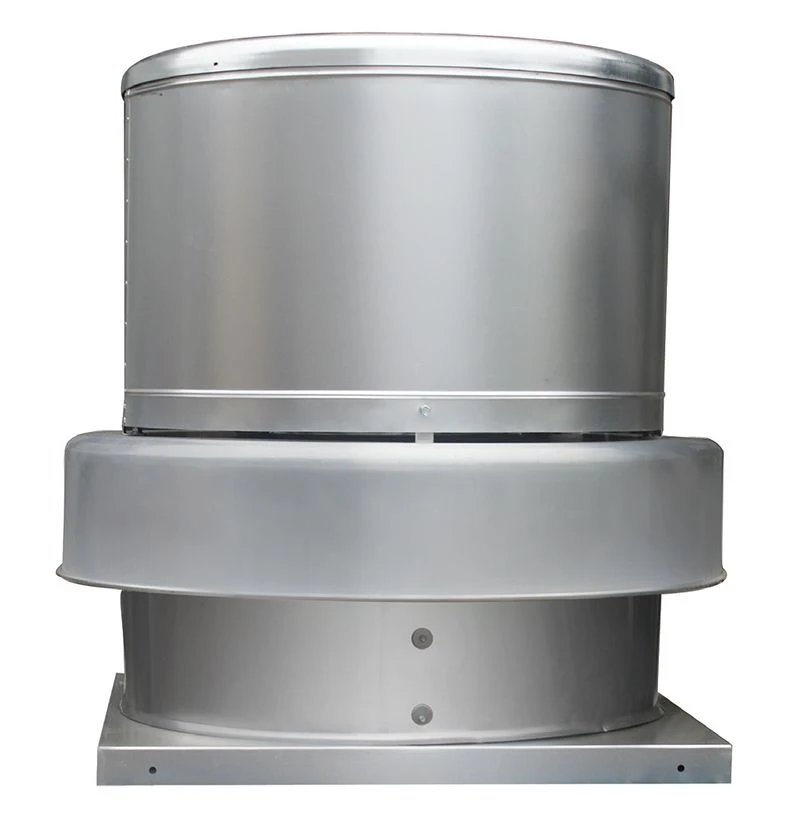
Vertical against horizontal discharge and what each does to re-entrainment, the curb and flashing details that decide whether the roof leaks, and the maintenance problem nobody plans for.
What a 300°C/2h marking commits the fan to, why the motor position decides whether the rating is achievable, and the fact that a smoke fan spends its whole life not being used.